iPhone Duo: Apple’s First Foldable Is Late, Expensive and Might Still Change Everything
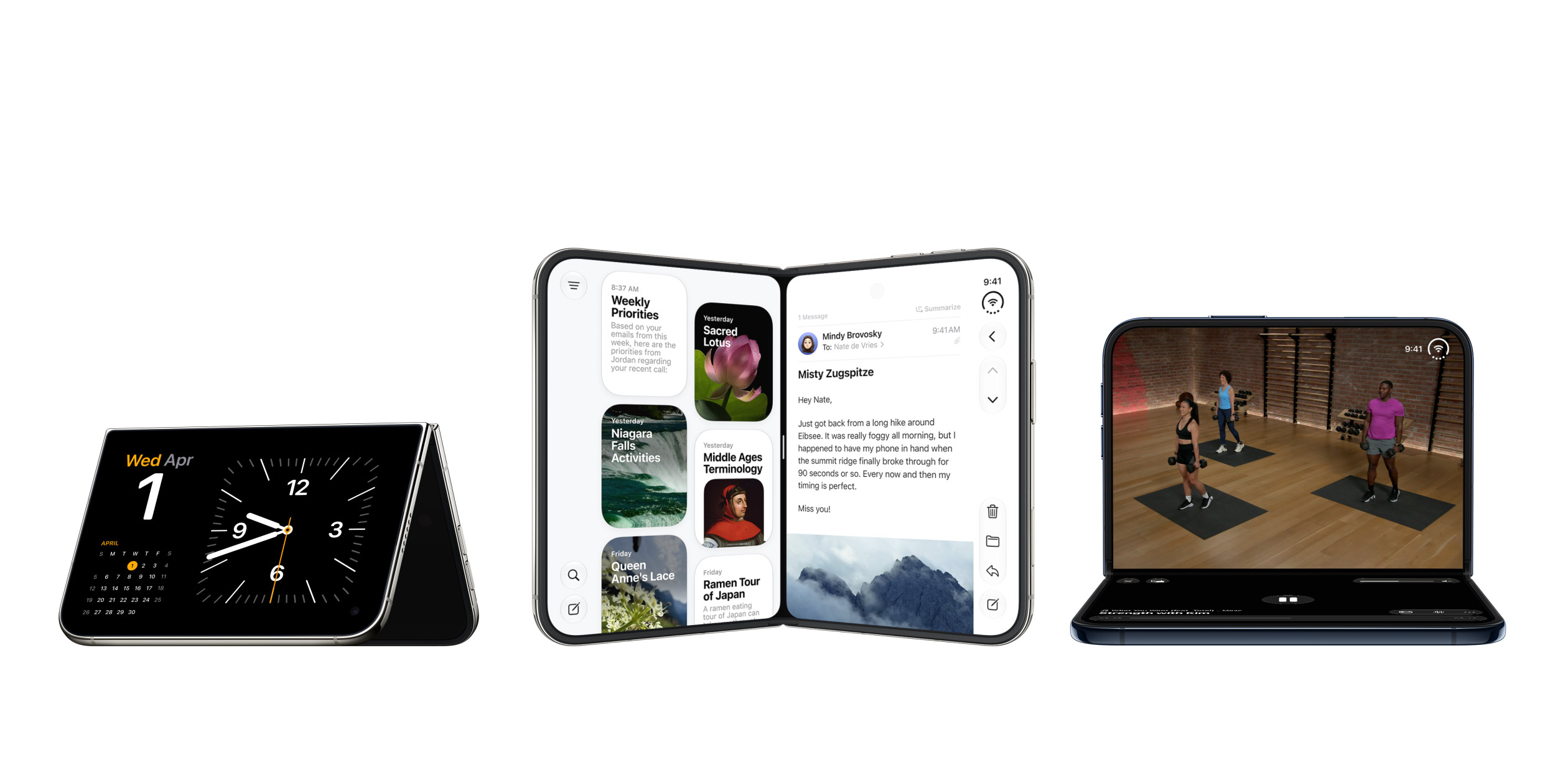
Apple has finally made a foldable phone.
On 9 September 2026, Apple showed off the iPhone Duo. It’s a book-style foldable with a 5.4-inch screen on the outside and a 7.6-inch screen inside. In the UK it starts at £1,999. That makes it the most expensive starting price Apple has ever put on an iPhone. Pre-orders open on 16 October, and it goes on sale on 23 October.
Let’s be honest about one thing first. Apple didn’t invent the foldable. Samsung has sold them for years. Google, Honor and Huawei have all made good ones too. Some of those Android phones are already thinner, lighter and have bigger batteries and better cameras.
So why does the Duo matter? Because Apple is doing what Apple often does. It waits until a technology is ready, then tries to make it feel simple and normal. The goal isn’t to be first. It’s to take a niche product and make ordinary people want one.
From the early hands-on reports, that plan may be working. But there’s a big “but”. Nobody has reviewed a finished retail iPhone Duo yet. Everything so far comes from short hands-on time at the launch event. So treat anything about battery life, durability, cameras and long-term performance as a first impression, not a verdict.
The key specs
The Duo has a titanium body. It’s 5.2mm thick when open and 11.3mm when folded, and it weighs 254g. That’s noticeably heavier than several recent Android foldables.
- Inside screen: 7.6-inch OLED, 1878 × 2670 pixels, 430ppi
- Outside screen: 5.4-inch OLED, 1398 × 2034 pixels, 460ppi
- Both screens: ProMotion up to 120Hz, Always-On display, up to 3,000 nits outdoors (Apple’s figure)
- Chip: A20 Pro, the same one as the iPhone 18 Pro
- Rear cameras: two 48MP cameras (main and ultrawide), no telephoto
- Unlock: Touch ID in the side button, no Face ID
- Protection: IP68
Storage and UK prices:
- 256GB: £1,999
- 512GB: £2,199
- 1TB: £2,599
- 2TB: £3,199
Yes, that top model is £3,199. At that point we’re a long way from what most people would call “a phone”.
One detail is easy to miss but really matters. Both screens have the same basic shape. So when you open the phone, what you’re looking at simply grows. It doesn’t jump into a different layout. Apple wants opening the Duo to feel like making the same screen bigger, not switching to another device.
The crease: Apple’s first real win
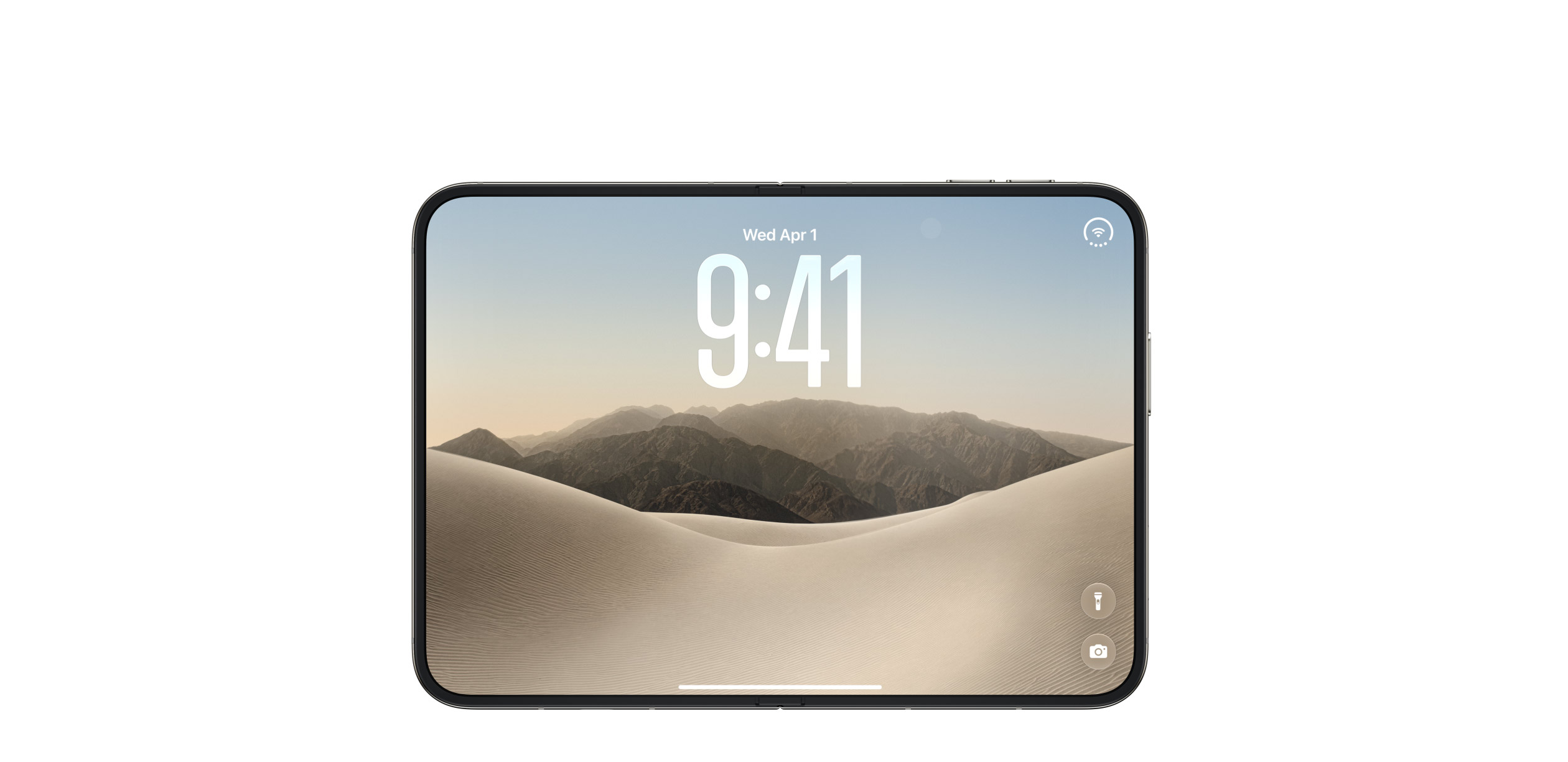
The crease down the middle has always been the giveaway on foldables. It’s got much better over the years, but you can usually still see a dip or a line of reflection where the screen folds.
Apple’s trick here is a nano-texture finish on the inside screen. It’s a matte coating that cuts reflections. It also makes the crease much harder to spot.
On this point, the early reports agree. Tom’s Guide’s Mark Spoonauer said he could still see the crease but could barely feel it. TechRadar’s Lance Ulanoff was impressed too, and at first described the crease as extremely hard to see. 9to5Mac said it was hard to notice from most angles.
It hasn’t gone, though. Later photos taken in different light showed the fold at certain angles. TechRadar told readers not to take the demos as proof that Apple had removed the crease completely.
That’s the fair way to see it. Apple hasn’t beaten the physics of a folding screen. It has made the crease much less annoying, mostly by pairing the hinge design with that matte finish.
If that holds up in normal daily use, it could matter more than shaving another millimetre off the thickness.
The real story is the software
The most interesting part of the Duo might not be the hardware at all. It might be iOS.
The Verge makes a fair point. Most of the Duo’s physical tricks already exist on Android foldables. IP68, stylus support, under-display cameras and softer creases aren’t Apple inventions. Where the Duo could stand out is how consistently the software and apps behave.
Apple has reworked parts of iOS 27 for the fold:
- Apps can react to the angle of the hinge.
- Supported apps rearrange themselves when the phone is half folded or fully open.
- There’s a foldable version of StandBy.
- There’s a new large-screen multitasking system.
Split View lets you run two apps side by side. You can also open two windows of the same app, swap them round and save app pairs you use a lot. Netflix, Zoom and Slack are already updating their apps for it.
This is a strength and a limit at the same time. Apple has gone for simple and predictable. Samsung goes much further. The Galaxy Z Fold8 handles more complicated multi-window setups and has years of large-screen Android work behind it.
So the Duo is probably easier to get your head around. But if you’re a power user who wants to juggle lots of windows, a Galaxy Fold may still suit you better.
Performance: the full Pro chip
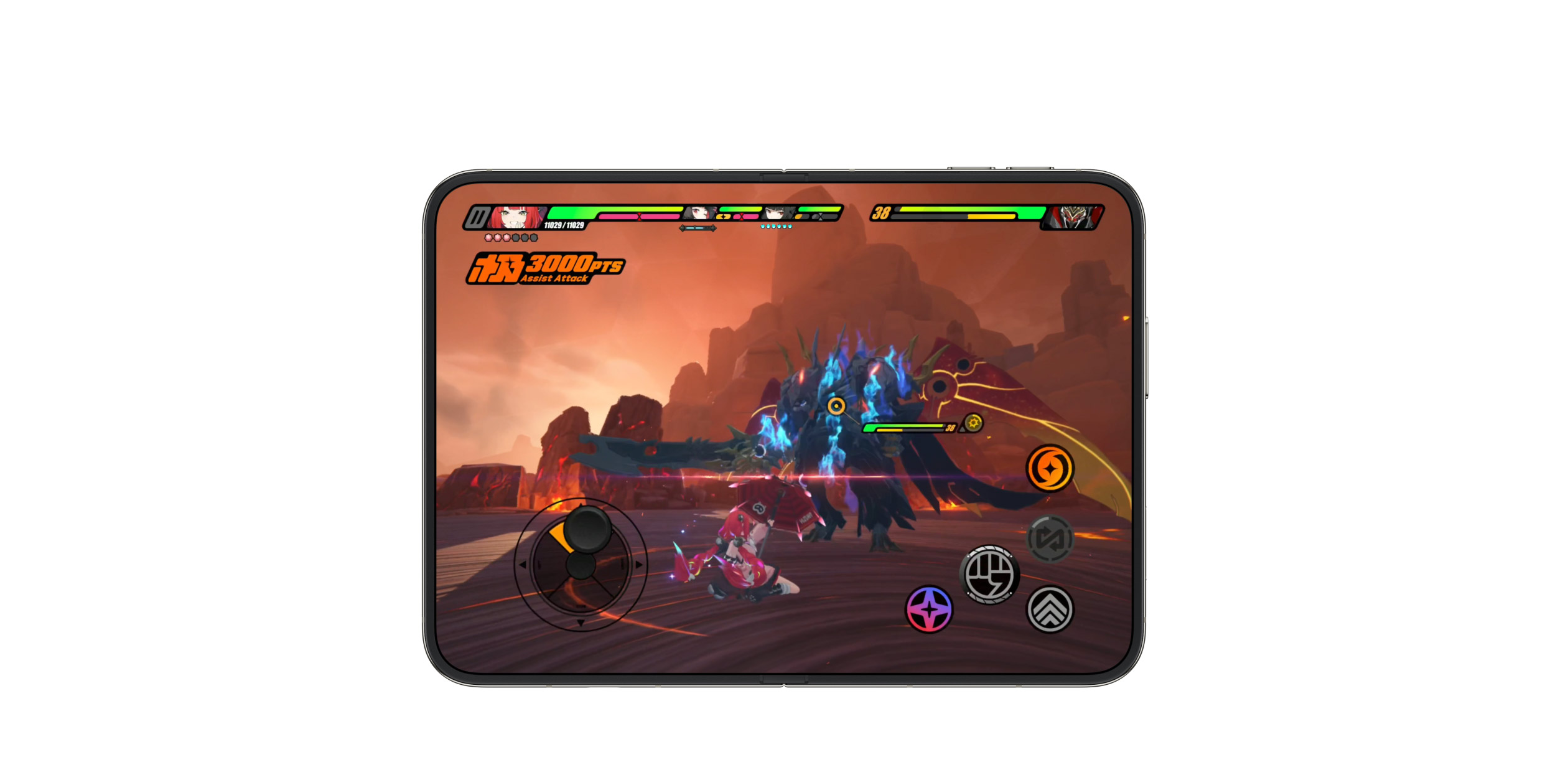
The Duo gets Apple’s new A20 Pro, the same chip as the iPhone 18 Pro family.
Apple says it has a six-core CPU, a seven-core GPU, a dual 16-core Neural Engine and hardware ray tracing. There’s also a custom vapour chamber to move heat out of the thin body. Apple claims up to 35 per cent better sustained performance than the iPhone 17 Pro.
Those are Apple’s numbers, not independent tests. Keep that in mind.
Still, the choice of chip says a lot. The Duo isn’t a side experiment with cut-down parts. It gets the same top chip as Apple’s regular Pro phones. That should help with games, video editing, photos and Apple’s growing list of on-device AI features.
Battery life: still a big unknown
There are two batteries, one on each side of the hinge.
Apple’s figures:
- Up to 24 hours of typical use
- Video playback: up to 44 hours on the outside screen, 31 hours on the inside screen
- Streaming: up to 37 hours outside, 26 hours inside
- Wired charging: about 50 per cent in 20 minutes with a strong enough USB-C adapter
- MagSafe: about 50 per cent in 30 minutes
- MagSafe and Qi2 wireless charging up to 25W
The built-in MagSafe magnets are an underrated win. Samsung, for example, doesn’t build a magnet ring into the Galaxy Z Fold8. You need a magnetic case instead.
But you can’t compare Apple’s battery numbers directly with Android test results yet. Screen size, brightness, signal and the apps being used all change the result, and every company tests differently. Until reviewers run the same tests on all of them, anyone calling the Duo’s battery great or terrible is guessing.
Cameras: good, but clearly a compromise
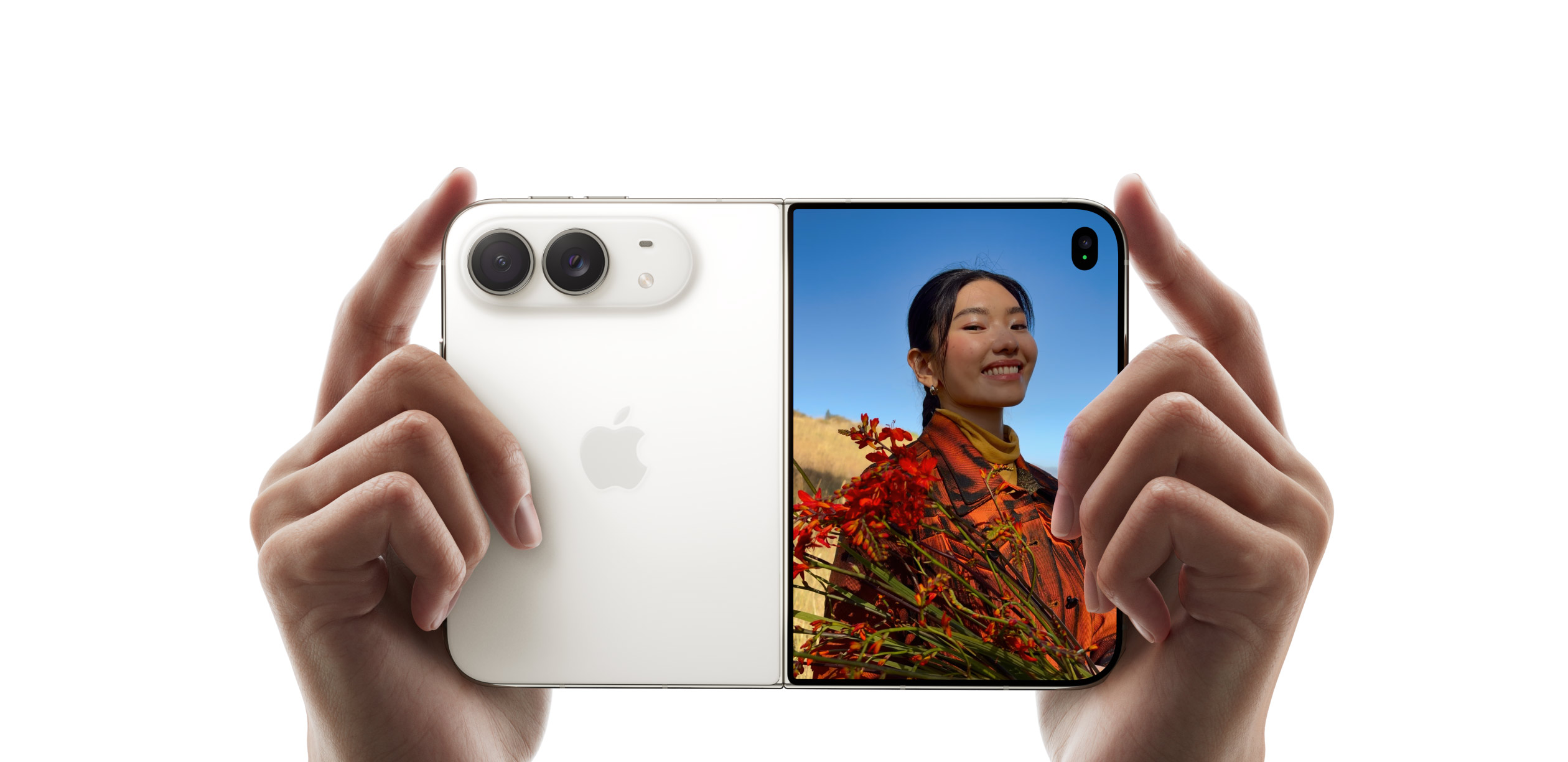
The camera is where Apple gave up the most.
You get two 48MP rear cameras. The main one has an f/1.6 aperture, and the other is an ultrawide. The main sensor can give you an “optical-quality” 2x crop. But there’s no dedicated telephoto camera.
That makes the Duo less flexible for photos than Apple’s own iPhone 18 Pro and Pro Max. Those add a 48MP telephoto and a variable-aperture main camera.
Apple has tried to make up for it with fold-specific features. Duo Preview, for example, shows the person you’re photographing a live preview on the outside screen while you take the shot with the main cameras.
It’s clever. It still doesn’t replace real zoom.
Google’s Pixel 11 Pro Fold and Honor’s Magic V6 both have dedicated telephoto cameras. If photos are the main reason you’re spending £2,000 on a phone, look at those seriously.
To be fair, the standard Galaxy Z Fold8 doesn’t have a telephoto either. It uses 50MP main and ultrawide cameras. So the Duo isn’t alone here.
No Face ID, no Action Button
Apple has dropped two familiar iPhone features.
There’s no Face ID. Instead, Touch ID is built into the side button, and it works whether the phone is open or closed.
There’s also no Action Button. Camera Control is still there, but anything you’d normally put on the Action Button has to be reached another way in iOS.
Is Touch ID actually worse on a phone like this? Maybe not. A fingerprint reader on the side works however you’re holding it. Fitting Face ID so it works both folded and unfolded would have been a much harder engineering job.
Even so, plenty of iPhone owners will see losing Face ID on a £1,999 phone as a step back. That’s understandable.
Durability may matter more than thinness
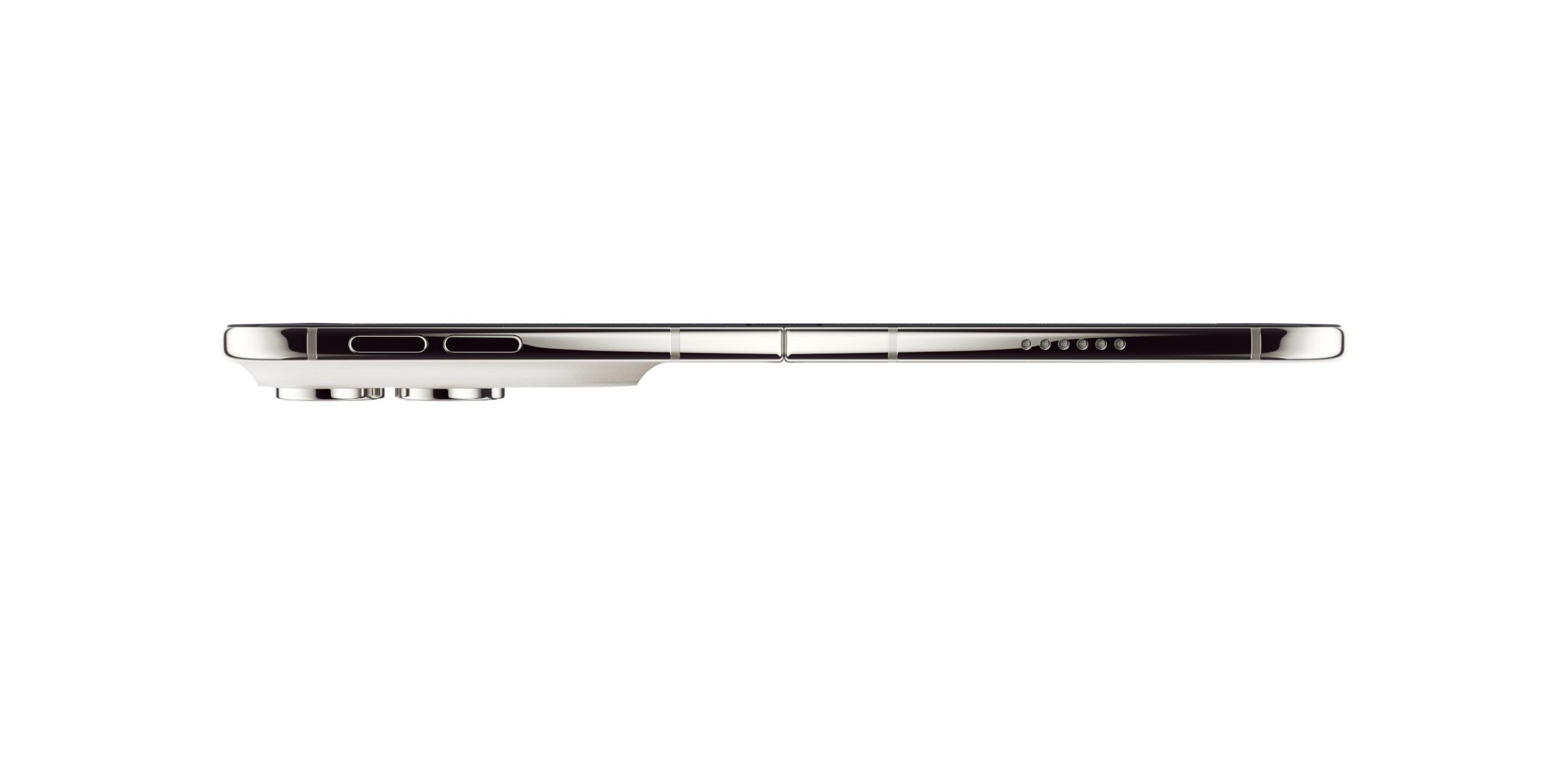
Foldables have always needed a bit more care than normal phones. The hinge, the bendy screen and dust getting inside are the usual worries.
Apple has given the Duo an IP68 rating. That covers dust, and water down to six metres for 30 minutes in lab conditions. It also uses Grade 5 titanium, Ceramic Shield and a hinge with more than 100 parts.
On paper, that beats Samsung. The Galaxy Z Fold8 is rated IP48. Samsung says it’s water resistant, but it doesn’t offer the same protection against fine dust.
Honor goes further still. The Magic V6 is rated both IP68 and IP69. Honor says SGS independently tested its hinge through 500,000 folds.
Ratings help, but they aren’t the same as years of real owners using the phone. Samsung has something no spec sheet can show: eight generations of foldables on sale. Apple is on generation one.
How the Duo’s hinge and screen hold up after one, two or three years is one of the biggest open questions about it.
iPhone Duo vs the rivals at a glance
- Apple iPhone Duo: from £1,999. 5.4 / 7.6in screens. 254g. 11.3mm folded. IP68. Best at iOS integration, MagSafe and the screen finish.
- Samsung Galaxy Z Fold8: from £1,699. 5.5 / 7.6in screens. 201g. 9.7mm folded. IP48. Best at being light and at multitasking.
- Google Pixel 11 Pro Fold: from £1,799. 6.5 / 8.0in screens. About 238g. About 10.2mm folded. IP68. Best at big screens, 5x telephoto and Google AI.
- Honor Magic V6: about £1,999 RRP. 6.52 / 7.95in screens. 219g*. 8.75mm folded*. IP68/IP69. Best at thinness, battery size and fast charging.
*Honor’s figures are for the white version and come with the maker’s own measurement notes. Apple’s specs come from Apple, Samsung’s from Samsung and independent reviews, Google’s from Google, and Honor’s from Honor and independent reviews.
iPhone Duo vs Samsung Galaxy Z Fold8
Samsung is the obvious rival.
The Fold8 starts at £1,699, which is £300 less than the Duo. It also weighs just 201g, 53g lighter than Apple’s 254g. And at 9.7mm folded, it’s 1.6mm thinner.
You’ll notice those differences every single day.
Tom’s Guide’s full review calls the Fold8 the best foldable for most people. It praises how light it is, the useful wide screen, the smaller crease and how mature the whole experience feels. Its complaints are the lack of a telephoto, no full dust protection, and Samsung dropping S Pen and Flex Mode support.
Apple hits back with better IP68 protection, built-in MagSafe, Apple Pencil USB-C support coming later, and software built for the half-folded position. Samsung’s Fold8 no longer has Flex Mode, because its hinge is designed mainly for fully open or fully closed.
So the choice is fairly clear:
- Galaxy Z Fold8 wins on weight, experience, price and advanced multitasking.
- iPhone Duo looks stronger on ecosystem, magnetic accessories, dust protection and hinge-aware software.
The real question is simple. Is Apple’s extra polish worth carrying 53g more and paying £300 more?
iPhone Duo vs Google Pixel 11 Pro Fold
Google takes almost the opposite approach.
The Pixel 11 Pro Fold costs £1,799, £200 less than the Duo. Its outside screen is much bigger at 6.5 inches, and it opens to an 8-inch inside screen. It weighs about 238g and is around 10.2mm thick folded.
It also has the camera advantage: three rear cameras, including a dedicated telephoto. It has built-in Pixelsnap Qi2.2 magnetic charging up to 25W, and an IP68 rating.
The reviews are mixed, not bad.
TechRadar calls it Google’s best foldable yet. It likes the cleaner design, the bright screen, IP68, the tidy Android interface and the deep Gemini integration. Tom’s Guide is much less keen. It criticises the Tensor G6 performance, the small battery improvement and ongoing problems with apps not scaling properly.
So here’s the trade-off. Google gives you more screen, better zoom and arguably more AI for £200 less. Apple is focused on smoothing out the little rough edges when you fold and unfold.
If you care about cameras, Gemini and a proper-sized outside screen, the Pixel looks better on paper. If you already live in the Apple world, leaving it might cost you more than that £200 difference.
iPhone Duo vs Honor Magic V6
If we only look at hardware, the Honor Magic V6 might be the Duo’s most awkward rival.
It’s only 8.75mm thick closed and around 219g in its lightest version. It packs a huge 6,660mAh silicon-carbon battery, 80W wired and 66W wireless charging, IP68 and IP69 protection, and a 64MP periscope telephoto. Both its 7.95-inch inside screen and 6.52-inch outside screen work with a stylus.
Next to that, the iPhone Duo looks almost cautious.
TechRadar’s long-term review of the Magic V6 praises its battery, durability, slim design and speed, but notes it gets warm under heavy use. Stuff also likes the thin but tough build and great battery, but points out rough edges in MagicOS and its multitasking. Expert Reviews calls it very thin and powerful, but mentions CPU throttling and the very high price.
This comparison shows Apple’s plan more clearly than any other:
- Honor is trying to push the hardware as far as it can go.
- Apple is trying to make you forget you’re using unusual hardware at all.
If you shop by spec sheet, Honor wins easily. Apple’s argument has to be that everything working together matters more than the numbers.
The Duo’s biggest rival might be Apple’s own iPhone 18 Pro
The phone most likely to talk you out of a Duo might not be an Android at all.
The iPhone 18 Pro starts at £1,199, and the Pro Max at £1,299. Both have the same A20 Pro chip. Both also have Apple’s better camera system, with a 48MP telephoto and variable aperture.
So a Duo costs £800 more than the iPhone 18 Pro and £700 more than the Pro Max, comparing starting prices.
That extra money buys you the fold, the 7.6-inch screen, the Duo-only software and a small folded shape. It doesn’t buy you a better normal phone in every way.
That’s important. The most expensive iPhone isn’t automatically the best iPhone. If you care most about photos, simple toughness, a lighter phone or value for money, the iPhone 18 Pro may suit you better.
The Duo is for a specific person: someone who really wants a tablet-sized screen in something small enough to fit in a pocket.
What reviewers are saying so far
Overall, the early mood is more positive than you might expect for Apple’s first go at a foldable.
- Tom’s Guide thinks Apple’s long wait has paid off with an unusually polished first attempt, and highlights how smoothly it moves between the two screens. It still points out that Samsung is lighter, thinner and cheaper.
- TechRadar is impressed enough that one of its experienced phone reviewers finds the Duo more appealing than earlier Android foldables, even without Face ID, the Action Button or a telephoto. The reason is mainly how well the hardware and software fit together.
- The Verge is more careful. It says the hardware isn’t revolutionary and that rivals got to most of these ideas first. The possible breakthrough is how well iOS holds together, Apple’s control of its ecosystem, and its power to get big app makers on board.
- Ars Technica also frames the Duo as joining a mature market, not inventing one. It arrives years late and is priced alongside other very expensive foldables.
- MacRumors backs up the good screen reports. It found the phone solid and premium, and the crease unusually hard to see or feel.
- What Hi-Fi? sees promise for films and TV, thanks to the big folding screen and Apple’s video ecosystem. It says a proper test will need a finished retail phone.
Here’s the interesting part. The experts don’t all agree that Apple has made the best foldable. They clearly don’t. What they mostly agree on is narrower: Apple’s first foldable feels unusually mature to use, even though several rivals have better hardware in specific areas.
Could Apple change the whole foldable market?
The Duo could matter well beyond Apple’s own sales.
Foldables are still a small slice of the market. IDC expects them to be only about 2.2 per cent of smartphones shipped worldwide in 2026. Because they’re so expensive, though, they make up a much bigger share of the money spent.
IDC forecasts the foldable market growing from about $26.7 billion in 2025 to $42 billion in 2026, and to around $68.2 billion by 2030. It sees Apple’s arrival as a big push for the whole category. TrendForce separately expects around five million iPhone Duo shipments in 2026. That would be almost 25 per cent of all foldables shipped that year, despite the late-October launch.
These are forecasts, not sales. Different research firms use different time periods and methods. But they show how much people expect from Apple here.
Reuters reports that analysts expect the Duo to put real pressure on Samsung. They also say Samsung still has huge advantages in factories, distribution and years of foldable experience.
Apple has a habit of joining a product category rather than creating it. So the question was never whether Apple would be first. It wasn’t.
The question is whether Apple can make everyday iPhone users care about something Android makers have struggled for years to push beyond tech fans.
Where the Duo looks strongest
Based on what we know right now, the Duo’s best points are:
- The screen finish and much less visible crease
- Smooth movement between the outside and inside screens
- Polished software that understands the fold
- IP68 protection
- Built-in MagSafe
- The powerful A20 Pro chip
- Apple’s ability to get developers to optimise their apps
Apple Pencil USB-C support could make that 7.6-inch screen far more useful too. Just note that Apple says it’s coming later, not necessarily on day one.
And if you already own a Mac, iPad, Apple Watch or AirPods, or have a big iCloud library, the ecosystem is another big plus. That’s something no spec sheet can really show.
Where it looks weakest
The weak spots are just as clear.
- At 254g and 11.3mm folded, it’s heavy and fairly thick for a 2026 foldable. The Fold8 is 53g lighter, and Honor shows how much thinner these phones can be.
- £1,999 is a lot, and 512GB takes it straight to £2,199.
- No telephoto camera, no Face ID and no Action Button.
- Multitasking is deliberately simpler than Samsung’s.
- Apple has none of Samsung’s years of real-world reliability data.
- Battery life, heat, camera quality and hinge durability still haven’t been properly tested over time.
So, is it any good?
The iPhone Duo isn’t the foldable with the most impressive specs.
Honor has a bigger battery, faster charging, a thinner body and a periscope camera. Samsung has made a much lighter phone with better multitasking. Google offers bigger screens, clever AI and a telephoto camera for less money.
That’s exactly what makes the Duo interesting.
Apple has focused on the things that still make foldables feel like a compromise. The visible crease. The jump from small screen to big screen. Apps that don’t behave the same way. Awkward half-folded positions. Accessories that don’t quite fit.
Early hands-on reports say the result feels unusually joined-up. Tom’s Guide calls the software very polished. TechRadar likes the screen finish and the ecosystem. The Verge thinks software, not hardware, may end up being the Duo’s biggest advantage.
But it’s too early to call the iPhone Duo the best foldable phone.
That needs finished phones in shops, proper battery tests, side-by-side camera comparisons, heat tests, drop and durability tests, and weeks of daily use, not a few minutes at a launch event.
For now, the fairest thing to say is this: Apple has arrived in the foldable market years late, but its first attempt already looks able to compete with phones that have had many generations to improve.
The Duo probably won’t win the spec battle. Its real test is whether Apple can make foldables feel normal, useful and polished enough that millions of regular iPhone owners decide they want one.
If that happens, the Duo’s biggest achievement won’t be beating the Galaxy Z Fold8, Pixel 11 Pro Fold or Honor Magic V6.
It will be turning the foldable phone from an expensive curiosity into just another kind of iPhone.
Images: Apple.